Abstract
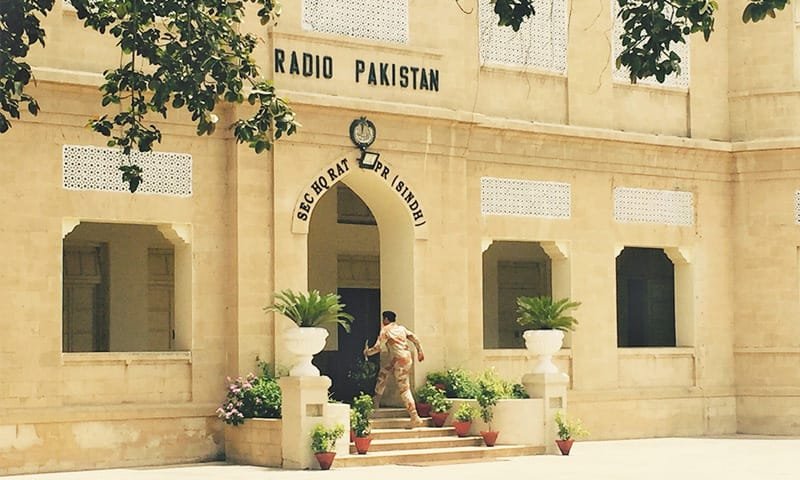
This doctoral dissertation examines the role of Radio Pakistan in influencing socio-economic development in central Punjab through its radio stations in Lahore, Faisalabad and Sargodha. The study analyses the policies, content and format of socio-economic development programmes, focusing on the social indicators of religion, health, education, culture and politics, and the economic indicators of agriculture, trade, SMEs, infrastructure and the China-Pakistan Economic Corridor, between 2008 and 2013.
The study used a qualitative research method and conducted a survey of Radio Pakistan listeners in Lahore, Faisalabad and Sargodha. Although radio, the primary source of information in rural areas, has already made significant contributions, further efforts are needed. Thanks to Radio Pakistan, women now have easier access to education without having to defy their parents and strict family heads. Introduction
Progressive World of Pakistan
Radio is one of the oldest forms of communication in the world. Radio enjoys the same status in Pakistan. One might think that radio has lost its importance in today’s technology-driven world. But that is not true. The reality is quite different. In Pakistan, radio is still the most important means of communication, both in rural and urban areas. There are facts about radio that are a reality in the modern, progressive world of Pakistan. For example, most rural areas continue to use this medium of communication for information, news and entertainment via social media (Shah, 2015).
The province of Sindh has the largest audience (60%). Sindh therefore tops the list, followed by Balochistan (53%), Khyber Pakhtunkhwa (52%) and Punjab (19%) (percentages are per 100 inhabitants per province). This shows that radio still has a large audience even in today’s innovation-driven world. The reasons for this include ease of access, straightforward installation and above all the cost-effectiveness of this communication method (Jumani, 2011).
This study examines the socio-economic impact of Radio Pakistan on rural areas of Pakistan. A qualitative analysis method is used (Bosch, 2010). In addition, the study discusses the negative aspects of radio, with the understanding that everything has its advantages and disadvantages. Finally, recommendations for future research are given (Buren, 2000; McLeish, 2005).
Research Objectives
The aim of this study is to analyze the impact of radio on social and economic development in rural areas (Curran, James, Gurevitch & Michael, 1993). It also identifies the factors that hinder socio-economic development in rural areas. Research Questions
Research questions form the basis for conducting the study. Questions arise in the mind of the researcher when a research project is initiated (Ekong & Sokoya, 1982). The research questions that the author will address are:
Why is radio still the preferred means of communication in rural Pakistan?
What changes has radio brought about in the social life of rural areas?
Has radio changed the economic conditions in rural areas?
What socio-economic development does radio promote?
In today’s technologically advanced world, is there a connection between the existence of radio and the emotional attachment of the Pakistani population to it?

Research Methodology
Research methodology is the strategy for conducting and concluding a study. Without a sound research methodology, a researcher cannot complete his research. There are two types of research methods: qualitative and quantitative (Faulder, 1984). The researcher will conduct a qualitative analysis. This includes personal interviews, scientific articles, and research reports. Statistical analysis is also a part of this study. Here, the researcher will try to compare radio usage in different provinces of Pakistan.
Current Problem
Radio is currently the most important medium of communication and education in rural areas. One reason for this is the distance between rural areas and technological infrastructure (Fraser & Restrepo-Estrada, 2002). Pakistan is still a developing country, and most rural areas lag behind in meeting their basic needs.
Technology is therefore largely inaccessible to them. After Pakistan’s independence in 1947, radio was initially the only available means of communication due to the limited development of the country at that time. The government therefore considered it an important tool to address various challenges (Folarin, 2000).
These challenges included the reintegration of migrants and the dissemination of government messages. All of this shows the emotional connection that Radio Pakistan has with the population.
In addition, there are many other reasons that motivate people in rural Pakistan to use radio.
These include:
The level of education of the rural population is low, which is why their thinking is still heavily focused on technology. They feared that television and mobile phones would destroy their traditional culture. Social norms in rural areas do not allow the use of the latest technology. In most rural areas of Pakistan, especially in southern Punjab, there is no communication network.
Although the society is predominantly composed of educated women, such concepts are not widespread in the interior of Sindh, Punjab, southern Punjab and the tribal areas of Balochistan. Women still live in these regions much as they did during the Iron Age.
They live in strict isolation, and television or other modern means of communication are unknown, as their fathers consider them to violate social norms. Therefore, they continue to rely on radio for information
For More Details “CLICK”