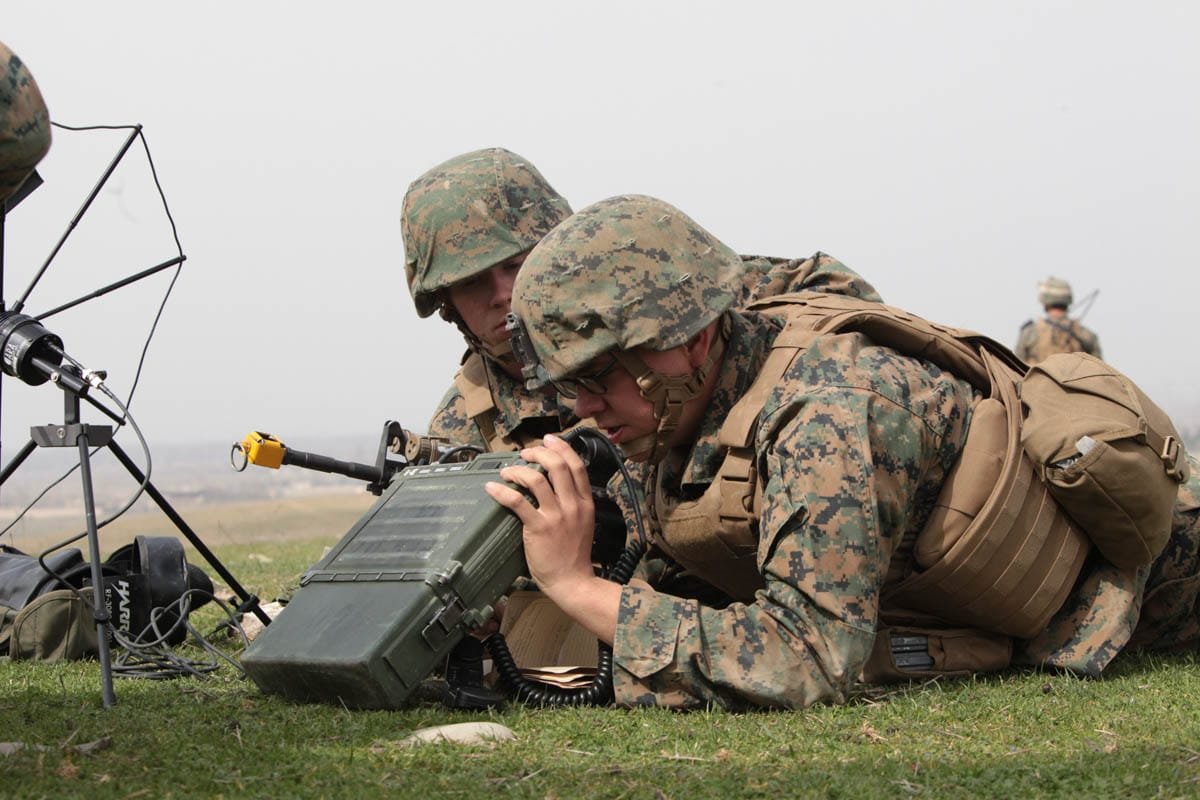
The U.S. military is actively developing a mobile battlefield network that is modular open and immune to enemy electronic warfare.
A key component of this network which serves ground troops combat vehicles command posts and air forces is software defined radios with an open architecture. This allows for rapid adaptation to adversary capabilities and the effective deployment of new technologies.
Standardized Radio Hardware
Standardized radio hardware that can be easily upgraded to new waveforms enables U.S. forces to communicate across branches within the ever-changing. Joint Domain Command and Control Environment (JADC2). By simultaneously using multiple waveforms, U.S. troops, aircraft, and vehicles can transmit and receive audio, video, and data without being intercepted by enemy forces.
Russia’s War in Ukraine
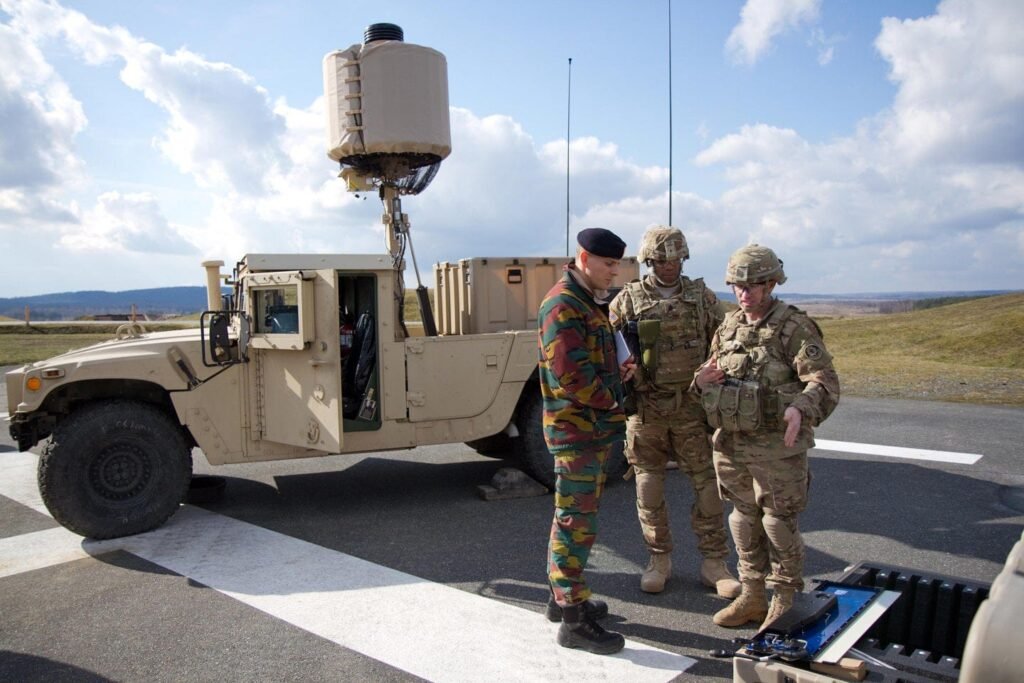
Russia’s war in Ukraine underscores the need for secure, multi-waveform battlefield communications. Ukrainian forces regularly target commercial radios and cell phone calls used by poorly trained and equipped Russian soldiers. Maj. Gen. Jeth B. Rey, head of the Network Oversight Team at Army Futures Command, said the war in Ukraine reaffirms the U.S. military’s commitment to building secure communications capabilities.
“The events in Ukraine underscore the need for secure communications, as well as increased mobility and survivability,” Rey said in an interview published in November with the Armed Forces Communications & Electronics Association International (AFCEA). “In addition, our Soldiers supporting operations in Europe are demonstrating remarkable innovation.”
Communications Technologies for Large Military Units
The rapid pace of technological advancements is hampering the deployment of secure communications technologies for large military units, their installation in thousands of vehicles and aircraft, and the training of service members in their use. The Department of Defense’s traditional development and procurement processes, which can take years to refine and field a specific radio or waveform, cannot keep up with the speed of digital technologies, Rey explained.
AFECA
“The network will continually face challenges from the rapid evolution of commercial technologies and how we can adapt them to military requirements and scale them across the various branches of the armed forces,” Rey told AFECA. “Based on current observations, the key challenges to modernizing the network to support the Army by 2030 are the speed of deployment, the delivery of new equipment to the armed forces, and the coordination of capabilities across different levels.”
Rey described JADC2 as a “critical capability” built on a data-centric tactical data architecture. The U.S. Army plans to introduce its Network Capability Set 23 (CS23) by 2023. The system consolidates more than 40 individual communications systems—from soldier-portable radios to communications satellites and software-defined network operating systems—into a single system designed to improve overall security and capability. According to Rey, CS23 will enable high-bandwidth satellite communications over commercial services while integrating electronic warfare (EW), reconnaissance, targeting, and fire control capabilities. It is also expected to reduce maintenance costs.
Mike Shepherd Role As a Manager
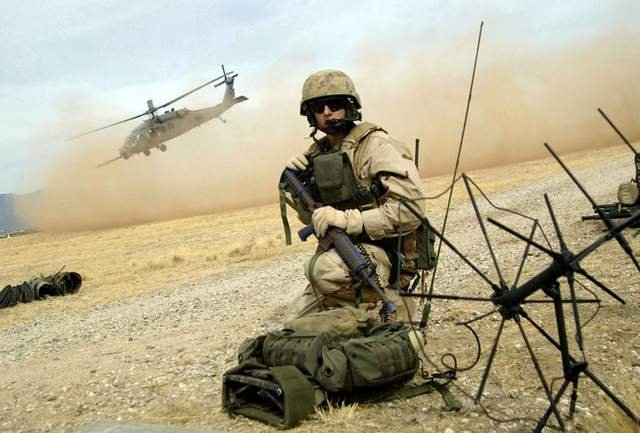
At the heart of these technologies are software-defined radios (SDRs). They feature reconfigurable hardware and software with an open architecture that enables digital data processing. SDRs can be tuned to any frequency band and use a variety of waveforms via plug-and-play software applications developed according to published.
U.S. Army standards. Mike Shepherd, manager of the Flex-Link radio program at Collins Aerospace (now owned by Raytheon), explained that the military wants to foster competition in communications software by establishing hardware architecture standards that more, and even smaller, companies can adapt their applications and waveforms to.
“The armed forces, particularly the Army, which is very active, have made this very clear,” Shepherd added. “No single company will manufacture everything itself, whether it’s the housing, the cables, the boards or the software. The goal is to create a level playing field so that multiple vendors can participate.
Reys Network CFT Development
The U.S. Army is working with industry to develop a reference architecture to define parameters and determine how industry can collaborate and develop communications technology that meets those parameters. Several cross-functional teams within Army Futures Command, including Rey’s Network CFT, are working on this.
The Network CFT at Aberdeen Proving Ground, led by General Rey, is one of those teams. It is complemented by the Future Vertical Lift CFT at Redstone Arsenal in Alabama, the Precision Navigation and Timing CFT, also in Redstone, and the Next-Generation Combat Vehicle FCT at Detroit Arsenal.
Radio Works in Navy, Air Force and Ground Army.
The Army issued a request for proposals (RFI) for the reference architecture last year. Another final procurement decision is expected in March, according to Shepherd. An open architecture approach to developing communications equipment only works if all branches of the armed forces follow it, ensuring “enabling communication and exchange of technology and data between the Air Force, Army, and other branches of the armed forces.” “And the Army and Navy,” he added.
During the U.S. Army’s Project Convergence exercise late last year, Raytheon recently demonstrated several solutions to network defense networks and simplify the U.S. Army’s command and control system. One of those technologies was Flex Link, an open radio system developed by its subsidiary Collins, which enables the connection of disparate air and ground platforms.
During the exercise
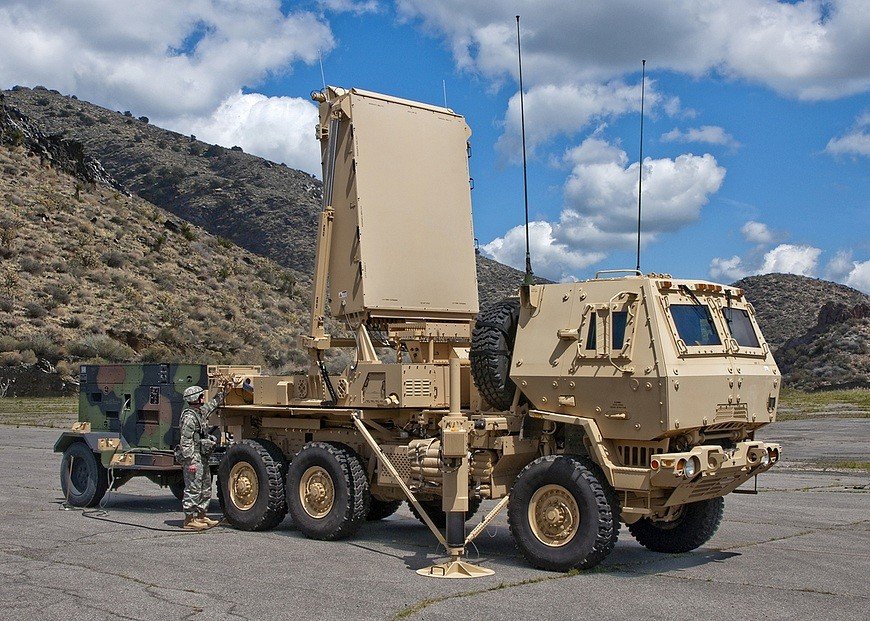
During the exercise, Flex Link was installed on the Army’s UH-60M helicopters, establishing a shared command and control network over a distance of more than 200 nautical miles. This confirmed the Army’s contribution to the joint JADC2 network.
Click for “MORE”