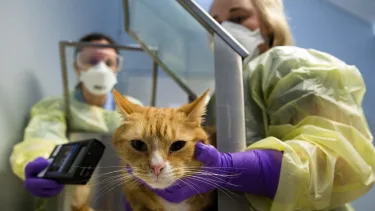
Radioiodine Treatment:
RADIOIOIDE TREATMENT PREPARATION GUIDELINES: Wean your cat off methimazole 7-10 days and 14 days prior to your appointment at Hills YD.
Radioiodine treatment for cats is only available at clinics licensed to administer radioisotopes. We have been treating cats with radioiodine at Cornell for over 25 years. Radioiodine treatment is safe and effective, with a cure rate of approximately 95-98% after a single treatment. Cats can receive a second treatment if needed. Radioiodine treatment eliminates the need for surgery, anesthesia, and thyroid medication. A single injection is administered subcutaneously (i.e., under the skin, like a vaccine), and the radioiodine is rapidly absorbed into the bloodstream. The iodine is taken up by the thyroid gland and incorporated into thyroxine.
Most cats have normal hormone levels within one to two weeks of treatment. Due to New York State radioisotope licensing, hospitalization is required. Your cat will likely need to stay in the hospital for 3 to 5 days after the injection (about a week in total). After discharge, certain precautions will be necessary, but these are not difficult and will be explained in detail.
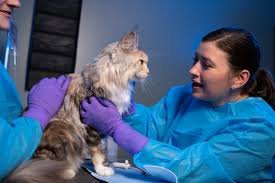
WHAT TO EXPECT DURING YOUR VISIT
Cornell University Hospital for Animals is the teaching hospital for the Cornell School of Veterinary Medicine. We educate veterinary students, STs (recently graduated veterinarians), and graduates with at least one year of training. A board-certified and experienced faculty member oversees and supervises the diagnosis and treatment of our animal patients and bears ultimate responsibility for them. We are nationally and internationally recognized as a leading veterinary school and teaching institution.
We recognize that your time is valuable, but we ask for your patience during the educational process, as students and junior doctors learn through experience. You will be met by a third or fourth year veterinary student and will meet with both interns and STs during your visit. The doctor will also introduce himself. During our examination, we will discuss your medical history, physical symptoms, and laboratory results. We will perform additional physical and laboratory tests to confirm the initial diagnosis and ensure that there are no other problems that may complicate treatment. All tests and procedures, including their associated costs, will be explained to you. We strive to be thorough and only recommend procedures that are absolutely necessary for your cat and avoid unnecessary tests.
Radioactive Iodine Treatment
What is Radioactive Iodine?
Radioactive iodine is the gold standard treatment for hyperthyroidism in cats. The condition is almost always curable and your cat is not at risk.
Radioactive iodine is the radioactive isotope iodine-131. It destroys thyroid tumors, thereby curing hyperthyroidism. Radioactive iodine treatment offers many benefits – for example, it is non-invasive, painless, permanent and free of side effects.
How unusual is radioactive iodine treatment?
Radioactive iodine is now an established treatment for thyroid tumours in humans and animals. So you don’t need to worry about it being experimental or unproven. However, this treatment is highly specialised; we require a licence to handle radioactive materials. And as one of the largest radioactive iodine treatment centres in the UK. We have extensive experience in advising pet owners on safety after their cat has returned.
How is radioactive iodine administered: The isotope is administered as a capsule.
How does radioactive iodine work?
Radioactive iodine is absorbed very quickly into the bloodstream and then by the thyroid tumour tissue – and not by any other tissue, including healthy thyroid tissue. It concentrates in the tumour, and the beta radiation it emits kills the tumour. Because each thyroid tumor acts as a “magnet” for radioactive iodine, the treatment also treats tumors in the chest area (which are notoriously harder to detect and treat) as well as the more common tumors in the neck.
Radioactive iodine kills thyroid tumors over time. In most cats, thyroid hormone levels return to normal within a few weeks, but it can take up to six months.
Does it always work?
Approximately 99% of cats treated with radioactive iodine at our center are permanently cured. In the vast majority of cases, this is achieved with a single treatment. However, less than 1% of the 99% of cats we cure require a second dose (this is included in our initial treatment fee if the tumor is diagnosed within six months of treatment). If a cat does not respond to the second dose, it is likely that the tumor is malignant. In this case, we generally do not recommend a third dose – for the simple reason that the radioactivity required to treat a malignant tumor would simply be too high.